TAZA Sister’s Story: A Journey of 90 Degrees Betterment
Not all change arrives in a rush. Some of it unfolds gradually in its own time; steady, intentional, and almost unnoticeable at first. Around 90 degrees, the transformation begins in a mindful process. Just below the boiling point, water gets warmer. Tea is often best steeped in this range, allowing its flavor to develop without turning bitter. Some broths and slow-cooked dishes are intentionally kept at this temperature too, preserving their quality while slowly building its relish.
In many ways, life moves like this as well. 90 degrees represent an intentional change. It is a state where one is motivated to improve continuously, embracing one’s own pace, time, and willingness to keep moving forward.
This time, we had the opportunity to speak with one of our TAZA Sisters, Wiwit Arum, and listen to how this 90 degrees of betterment unfolded for her.
How It All Started

Wiwit Arum, or simply Wiwit to those close around her, is a working mother balancing life between Jakarta and Tangerang. Her days begin early, commuting by shuttle to her role at the company she has worked for more than 9 years. Like many women navigating work, family, and her fitra, Wiwit’s journey into syar’i dressing didn’t exactly begin with a 180 degree flip.
In September 2025, Wiwit was given the opportunity to perform Umrah. At the time, she wasn’t familiar with abayas, nor had she deeply considered what it meant to dress in one. It was her close circle who guided and encouraged her. She followed what she was advised to wear, without overthinking it. And somehow, something shifted.
As the days went by, she began to notice how different it felt. There was a sense of ease and security, especially during shalah. Without needing to wear mukena, she realized her clothing was already sufficient. “They (abayas) properly covered me in a way that felt both practical and comforting,” Wiwit shared with us.
Embracing The Self-Betterment Phase
Listening to Wiwit’s story, one thing becomes crystal clear to us.
One’s journey doesn’t always come in the form of a single, defining decision. More often, it shows up through small yet profound shifts: a growing curiosity, a willingness to explore, and a gradual understanding of what is right over time.
For those who may find themselves in a similar place, we’ve gathered a few reflections from Wiwit’s journey that might offer a sense of relatability as you move through it.
1. Do your research. Preference is your best guide.
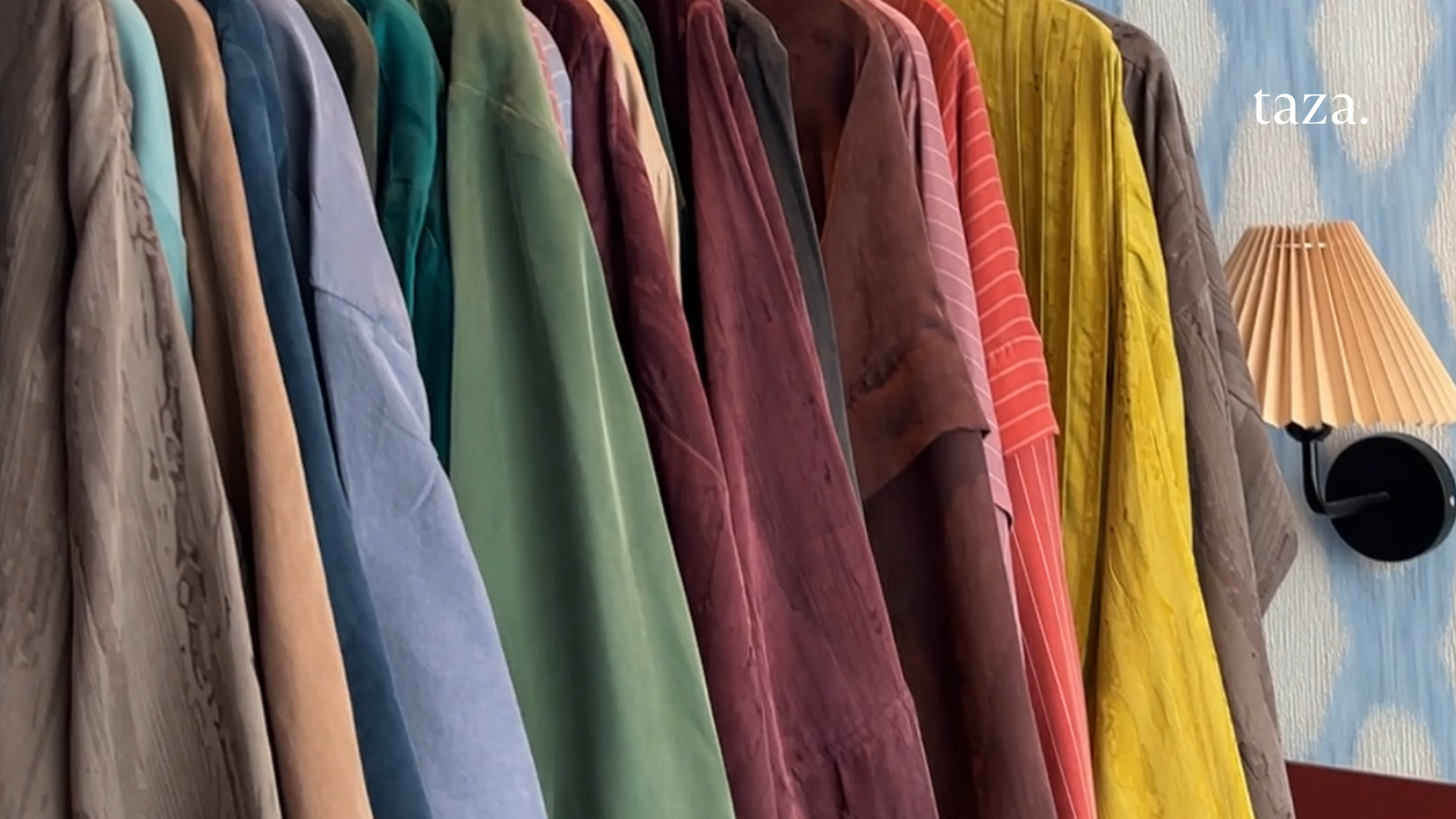
Apparently, the experience she felt during Umrah stayed with her. After returning, she began a thorough research about abaya and brands that could work for her on various occasions. In the midst of her search, she came across TAZA through social media. What first caught her attention wasn’t just the product. The visual storytelling felt intentional, reflective, and relatable. When she explored further, she noticed how strongly material is emphasized, something that immediately resonated with her personal preferences.
But what lingered most was the message that left a particular impression. Through A Tale of Tomorrow, she felt gently reminded that life in this dunya is indeed filled with a deeper responsibility. “The message felt subtle, almost like a reminder from a dear friend as there was no sense of being told what to do, but rather an invitation to reflect,” said Wiwit.
Pro Tip: Taking the time to explore allows you to find what truly aligns, not just with your needs, but with your values and the direction you are growing into.
2. Listen to how you feel.
As someone who pays close attention to fabric and comfort, material became a key consideration. She had experienced firsthand how unforgiving heat could be, and how important breathability is, especially in warmer climates, one like our beloved country.

Her first piece was the Fina Abaya 1.0. It gave her a sense of confidence in wearing it. There wasn’t a dramatic, defining moment when everything suddenly clicked. Instead, it was an abundance of moments where she re-discovered comfort. Ibadah became much simpler. She no longer needed to think about bringing additional layers to cover for her. It felt practical, comfortable, and aligned with what she had begun to understand during Umrah.
Wiwit suggested for women who may still feel hesitant to just simply try. Allow yourself the space to explore what feels right, until you find what suits you best.
3. Remember the most important thing: purpose.
Over time, these encounters, both with the clothing and the reflections that came along with it, helped Wiwit see her journey differently. It wasn’t just about changing the way she dressed as it became part of a broader understanding of what it means to live as a Muslimah.
For Wiwit, sharia-compliance dressing carries a simple but deeper meaning than mere clothing. It is about feeling prepared, and worthy, to meet our Rabb in whatever state she is in, wearing what she already has on. Be it shalah, other form of ibadah, or even death.
Wiwit reflected, “As we know, death can come to us at any time. So when my time comes, I want to be in a state where I’m wearing something that is proper.”

And perhaps, that’s what 90 degrees of betterment comes down to.
It’s not about being halfway there, and it’s definitely not about doing things halfway either. Let us allow change to take place, embrace every step and always be grateful for every single progress, even if it seems small.
The journey to self-betterment is a race between us and no one but ourselves, so remember this: when you aim to start, you’re already winning.